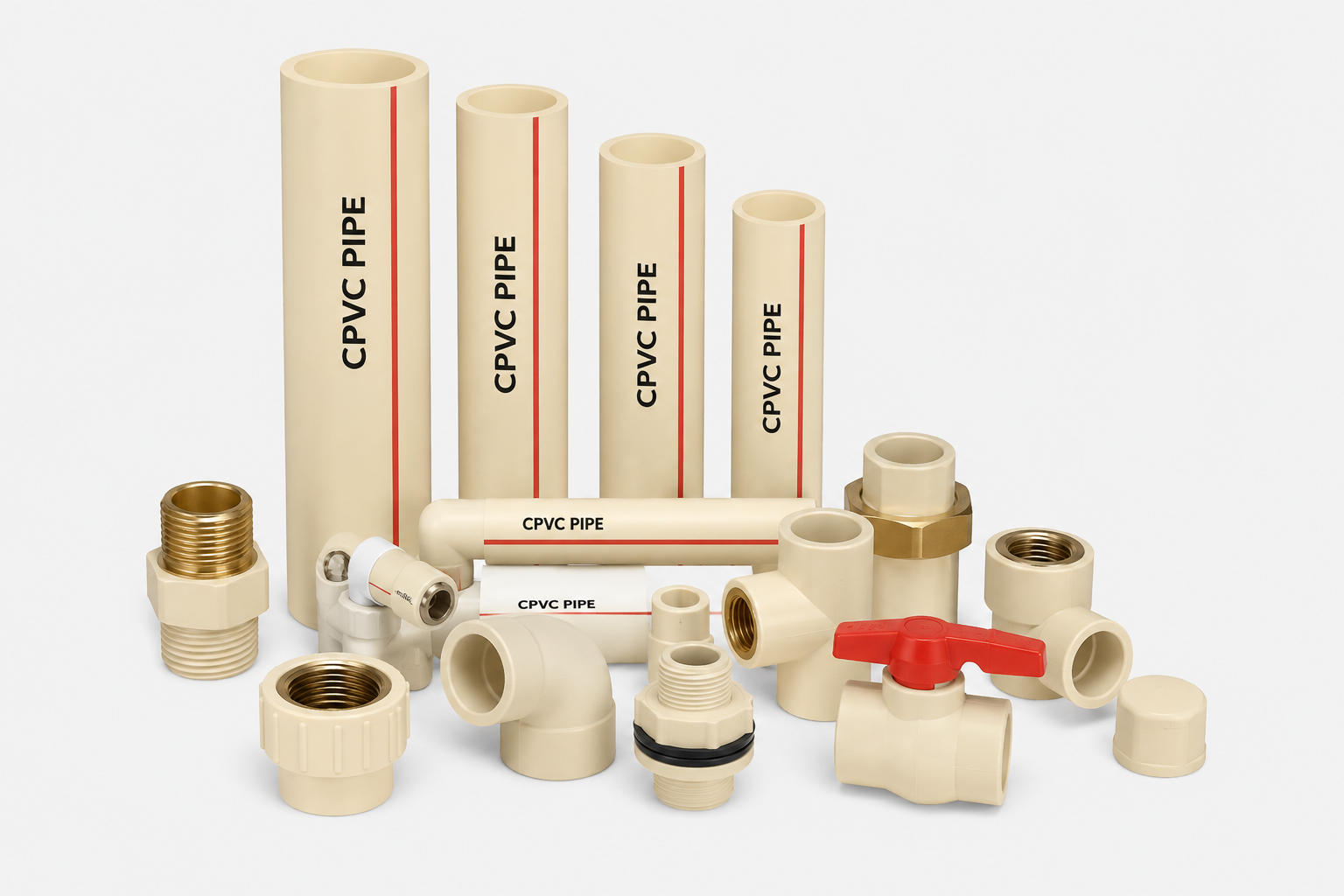
CPVC piping systems: installation and use factors in claims
CPVC piping systems are commonly involved in water-loss and fire suppression claims. While manufacturing defects can occur, most failures are associated with installation practices and in-service conditions rather than the material itself.
What CPVC piping systems are (and what they are supposed to do)
CPVC piping systems are used to transport water in residential plumbing and fire suppression systems. They are designed to handle pressure, temperature changes, and chemical exposure within specified limits.
Their intended function is to deliver fluid without leaking while accommodating system conditions such as pressure and temperature variation.
Installation factors that change the story
Thermal expansion
Thermal expansion must be accommodated through offsets, loops, and proper support spacing. This is especially important in environments with high temperature variation, such as attics.
Support and layout
Proper support placement and spacing are critical to allow for expansion and contraction. Documentation of support locations and pipe routing is important.
Environmental exposure
Exposure to sunlight and environmental conditions can affect performance and must be considered during installation.
How CPVC piping systems typically fail
Most CPVC failures fall into a practical framework:
- Installation-related issues
- Improper thermal expansion accommodation
- Improper solvent use or curing conditions
- Installation in unsuitable temperatures
- Material and manufacturing issues
- Rare material defects
- External and usage-related factors
- Impact or side loading
- Environmental exposure
- Age, wear, and maintenance
- Minimal compared to other materials
- System-related issues more significant
What an expert looks for during a product examination
During a CPVC evaluation, fracture classification is a primary focus.
Typical focus areas include:
- Fracture patterns and morphology
- Bending or pressure-related characteristics
- Crack propagation features
- Evidence of impact or external force
These indicators are used to determine how the failure occurred and how it relates to installation and system use.
What to document before removal
If a CPVC failure may become a product exam or subrogation question, document first. Specifically:
- Pipe layout and direction changes
- Support locations and spacing
- Environmental conditions
- Water supply composition
- Installation practices and system use
- Photographs prior to removal
This information is critical for associating fracture patterns with installation conditions and system operation.
When to bring in a forensic engineer
If the cause of failure is unclear, involves fracture analysis, or may be tied to installation practices or system use, a forensic engineer can help evaluate the evidence and document findings in a clear, defensible way.